A Building That Was Never Supposed to Survive
Since 2019, the Flat Iron has stood completely empty in the middle of one of the busiest intersections on the planet. Its last tenant, Macmillan Publishers, left and never returned. Its three co-owners went to war in court over what to do with it.
Then things got strange.
When a judge finally forced a public auction to settle the dispute, a man named Jacob Garlick walked in, bid $190 million, won the entire building—and then vanished without paying a cent.
Now, after years of legal battles, a failed auction, and a renovation bill that would make your eyes water, the Flat Iron is finally becoming 38 luxury condominiums.
But this building did not get here easily. It never has.
The “Folly” That Won
Let’s start at the beginning. Before this building was iconic, people thought it was a joke.
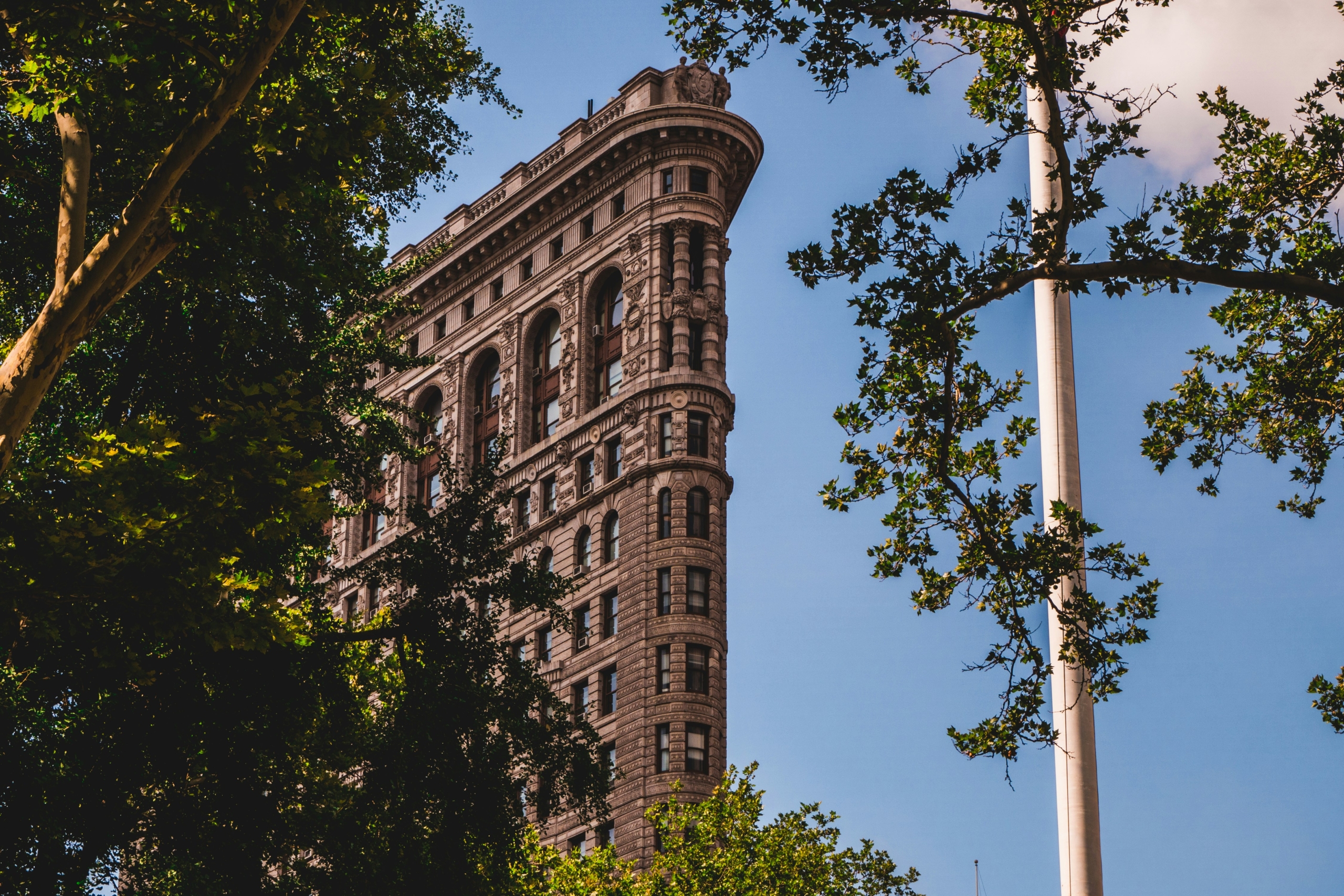
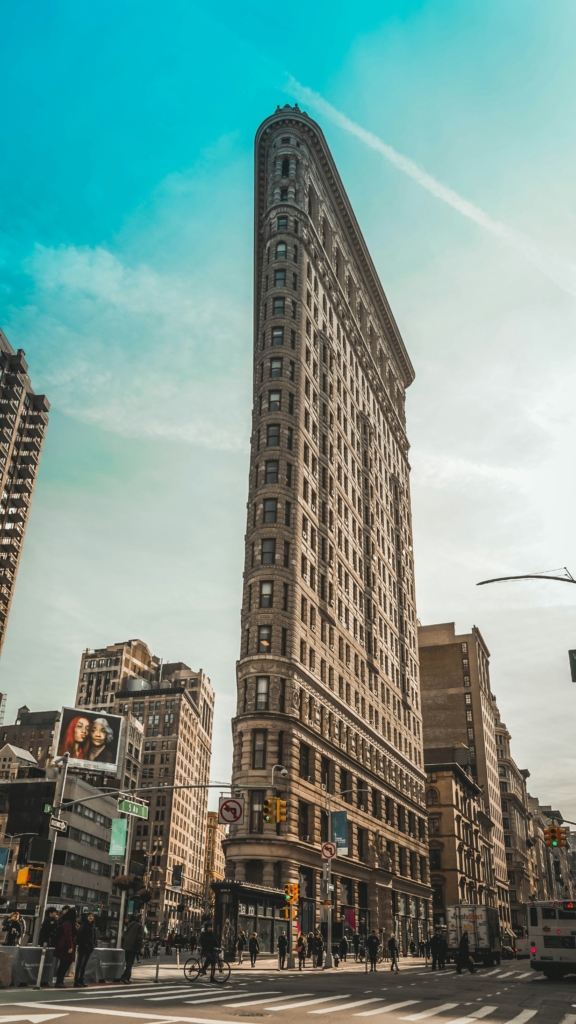
The year is 1901. A real estate developer named Fuller Construction Company acquires a very awkward piece of land in Manhattan. The plot sits at the intersection of Fifth Avenue and Broadway, where the two streets cross at a strange angle and form a triangle—a sharp, pointy wedge of land with a tip barely six feet wide.
When the building went up, that triangular shape turned 23rd Street into a wind tunnel. The gusts raised women’s skirts and scattered paper money from pedestrians’ pockets. In an era when a glimpse of an ankle was scandalous, men began deliberately gathering on 23rd Street to watch. The crowds grew so large that loitering near the building became a punishable offense.
Any sensible developer would have walked away. But Fuller Company hired one of America’s most celebrated architects, Daniel Burnham—the mind behind the 1893 World’s Columbian Exposition in Chicago.
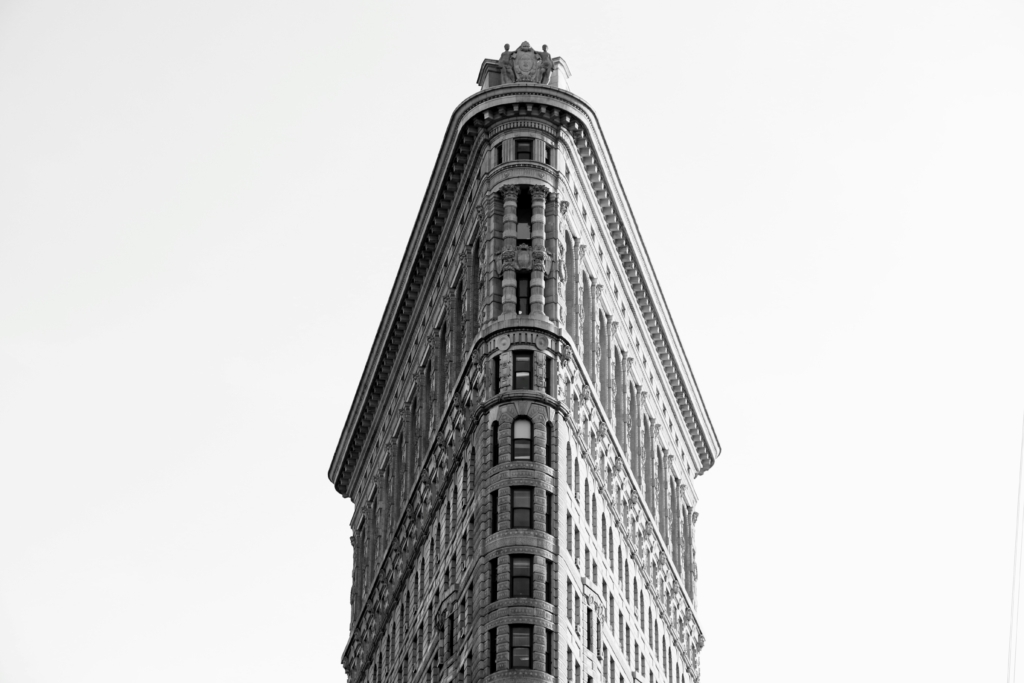
The press called it “Burnham’s folly.” Critics said the wind would knock it over before the decade was out. One newspaper joked that it looked like a slice of pie someone forgot to eat.
But Burnham wasn’t playing. He used a steel skeleton frame—one of the earliest uses of this technique in New York City. Instead of thick masonry walls doing all the heavy lifting, a hidden internal cage of steel carried the load. This is the same basic principle used in almost every skyscraper built today.
In 1902, construction wrapped up in just one year. And then something unexpected happened: people fell in love with it.
From Photographers to Hollywood
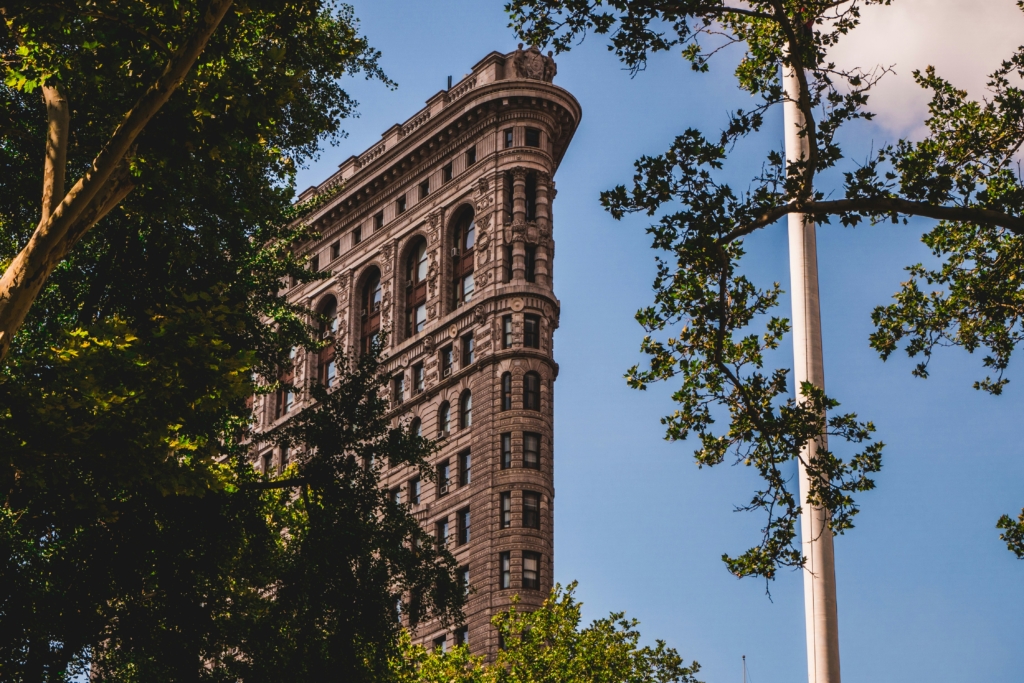
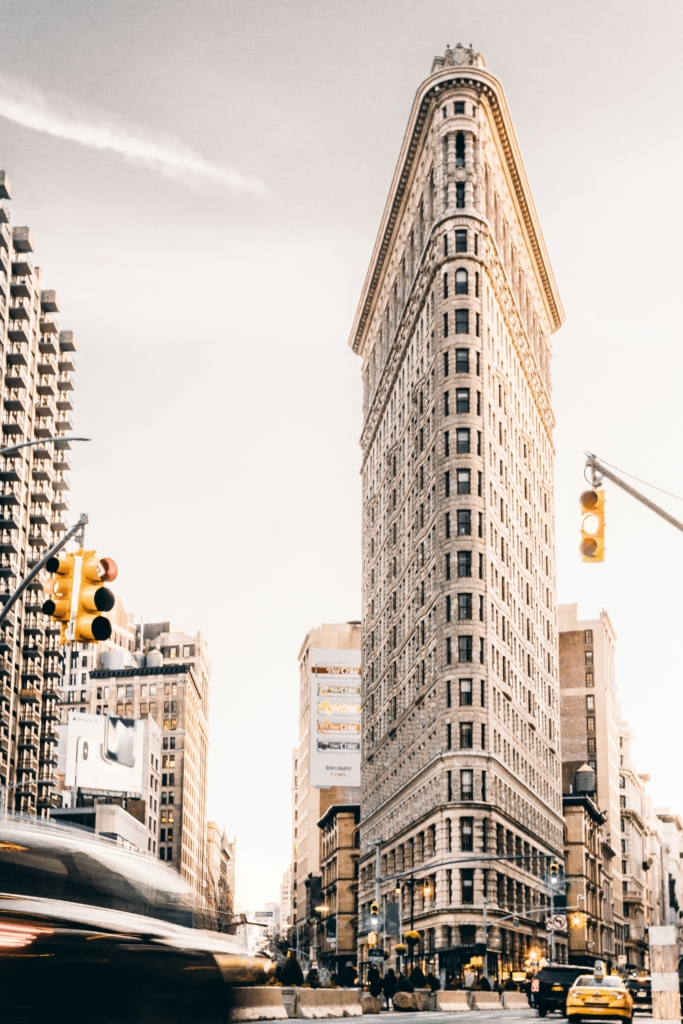
Officially called the Fuller Building, New Yorkers started calling it the Flat Iron almost immediately, because it looked exactly like the clothes irons of the day. The nickname stuck.
Photographers couldn’t leave it alone. Alfred Stieglitz captured it in 1903, rising out of a snowy, misty morning. Edward Hopper was drawn to it. Artists across generations used it as a subject. By mid-century, it wasn’t just a building—it was the building that said “New York” louder than almost anything else.
Hollywood figured that out fast. The Flat Iron has appeared in more films than most working actors:
-
Spider-Man (2002) – as the home of the Daily Bugle
-
Godzilla (1998)
-
Armageddon
-
Enchanted
-
The Secret Life of Walter Mitty
In 1966, New York City designated it a landmark. In 1989, the federal government named it a National Historic Landmark. The building that people bet would collapse in the first strong wind was now federally protected.
The Phantom Bidder
Now let’s get to where the story stops being triumphant and starts being genuinely painful.
For most of the 20th century, the Flat Iron functioned as a commercial office building. The most prominent long-term tenant was Macmillan Publishers. But in 2019, Macmillan packed up and left. The building went dark.
At that point, the Flat Iron was owned by three stakeholders. Two wanted to convert it into luxury residential apartments. The third disagreed. You get a lawsuit.
The legal battle dragged on for years. Eventually, a judge forced a public auction—the first court-ordered sale of the building in nearly a hundred years.
It should have been clean. Whoever bids the most wins, and everyone moves on.
Instead, a man named Jacob Garlick walked in, bid $190 million, and won.
Nobody in the room knew who he was. He was not a recognized name in New York real estate. Under the auction rules, the winning bidder had ten days to provide a deposit of $19 million.
Garlick did not pay. He didn’t even show up or call. The deposit never arrived.
It turned out that bidders were not required to provide any deposit before participating—zero financial vetting. Anyone could walk in, bid any number, and walk back out with no consequences.
The court stepped in again. A second auction was scheduled. This time, the majority stakeholders won the building back for **$161 million**—roughly $30 million less than Garlick’s phantom bid.
Who Jacob Garlick actually was, and whether he ever had $19 million, has never been fully resolved. He gave one brief interview, said owning the Flat Iron had been his dream since age 14, and then went quiet.
The $190 million has never been paid.
The Long Road to Luxury
For the first time in its 124-year history, the iconic Flat Iron Building is opening its doors to residents. The auction chaos is over. The building has clear owners now.
So why are the lights still off?
The answer is renovation. The Flat Iron is breathtaking on the outside, but inside, the infrastructure is a product of the early 1900s. Modern buyers need updated electrical, proper climate control, and reliable fast elevators—technology a building from 1902 was never designed to support.
Gutting and upgrading a National Historic Landmark is not fast or cheap. There are regulations. There are engineering challenges unique to a building this old and this unusually shaped.
But now, the debate is over. The building that started as office space is becoming one of the most expensive addresses in Manhattan.
-
38 luxury condos
-
Prices start at $10.95 million for a three-bedroom
-
Reaching $50 million for a five-bedroom on the 21st floor
-
A reported $357 million construction loan
-
Replacing more than 1,000 windows
-
Restoring thousands of terra-cotta fixtures
-
Repairing the six-foot-tall cornice
For the First Time, It Will Light Up
And here’s the perfect ending to this whole story.
For the first time in its history, the Flat Iron Building will be illuminated at night. A new LED lighting scheme, approved by the Landmarks Preservation Commission, will shine most prominently on the top five floors beneath the cornice, cascading downward to emphasize its architectural details.
So a building that survived being called a folly—that survived a phantom $190 million bid—that sat dark and empty for years while the city argued over what to do with it—is now finally going to light up the Manhattan skyline for the first time ever.
That feels like the right ending.
The Best Place to See It
But here’s the thing I keep coming back to:
The Flat Iron was built on land nobody wanted. Designed in a shape critics openly mocked. Constructed using a method people did not fully trust. It survived the Great Depression, during which it sold for just $100,000—a number almost too painful to say out loud.
It survived decades of being overlooked, then rediscovered, then loved, then fought over in court, then subjected to one of the strangest property auctions in American history.
And it is still standing. Still one of the first things people think of when they think of New York City. Still the building that stops pedestrians mid-stride on 23rd Street. Still the subject of a thousand photographs taken every day by people who have seen it a thousand times and cannot help themselves.
The best place to see the Flat Iron Building is from Madison Square Park, directly across 23rd Street to the north.
Go see it. It will not disappoint.