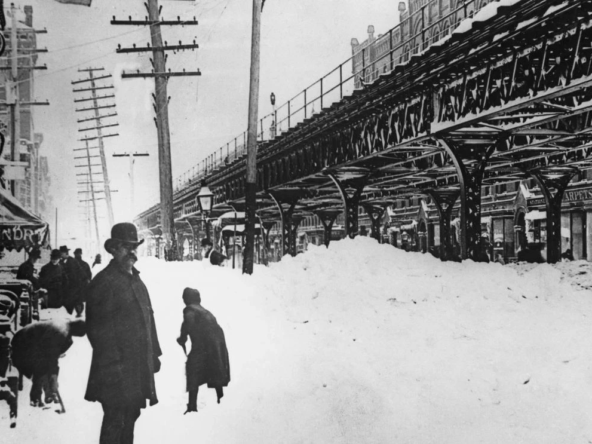

From Manhattan penthouses to hidden basements, these films reveal a truth every serious investor understands:
Who controls property… controls power.
🏡 The Godfather (1972) – Real Estate as Power
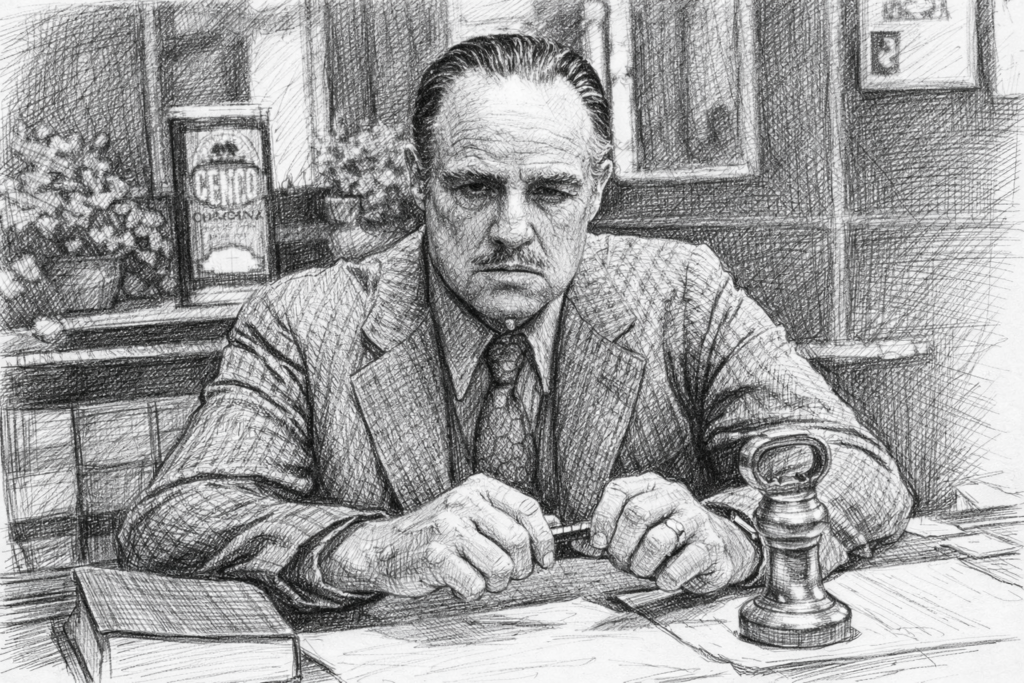

Oscar Wins: Best Picture, Best Actor, Best Adapted Screenplay
At its core, The Godfather is not just a crime saga—it’s a blueprint for how power consolidates through ownership. The Corleone family’s evolution from street-level operations to control of casinos and compounds reflects a shift into institutional-grade real estate assets. Their Long Island estate symbolizes legacy and insulation, while the move into Las Vegas represents strategic geographic expansion into high-cash-flow properties. Michael Corleone understands what every sophisticated investor eventually learns: controlling land and income-producing assets creates an ecosystem where influence compounds over time. In real estate terms, it’s the transition from hustle to holdings.
The Godfather is, at its core, a story about control—and nothing represents control more than land and assets.
The Corleone family’s transition from organized crime into Las Vegas casinos mirrors a classic real estate strategy: moving from informal income to institutional-grade assets.
- Long Island estates → legacy wealth
- Las Vegas casinos → income-producing assets
- Nevada expansion → jurisdictional advantage
Real estate takeaway: Ownership creates ecosystems. The more strategic the location, the more absolute the control.
🏙️ On the Waterfront (1954) – Infrastructure Is Real Estate
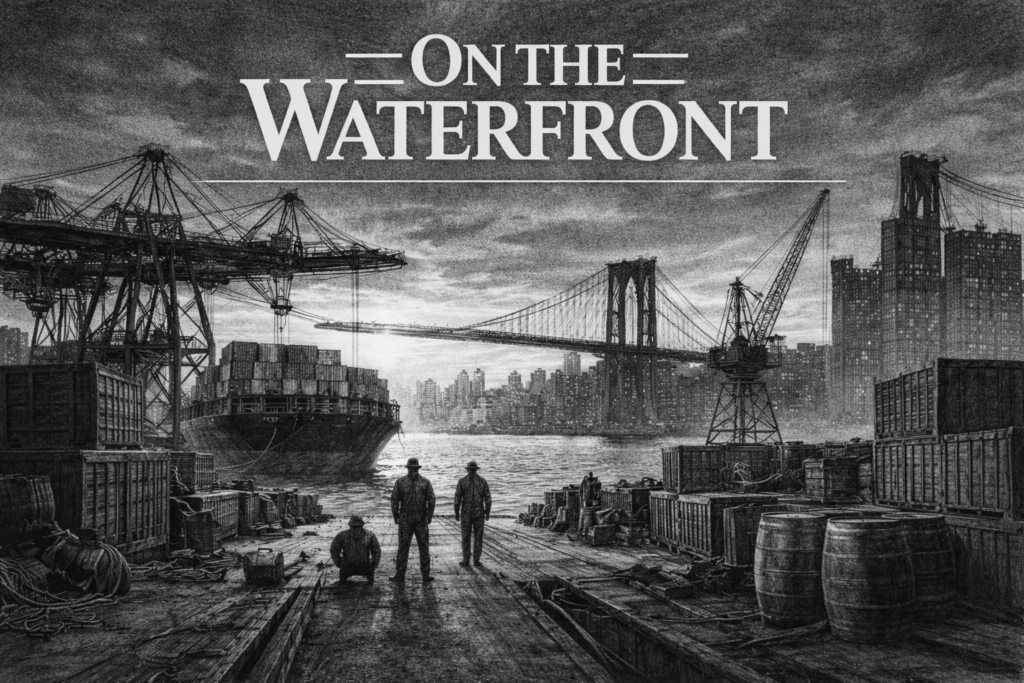
Oscar Wins: Best Picture, Best Director, Best Actor
On the Waterfront highlights a critical but often overlooked aspect of real estate: infrastructure. The docks are not just a setting—they are the economic engine of the entire story. Control of the waterfront means control of labor, goods, and access, making it one of the most powerful forms of real estate ownership. In cities like New York, waterfront and transit-adjacent properties have always commanded premium value for this reason. The film demonstrates that real estate isn’t limited to residential or luxury—it includes the logistical backbone of a city, where power is derived from controlling movement and access.
This film isn’t just about labor—it’s about control of infrastructure.
Waterfront property has always been among the most valuable real estate in New York. Whoever controls the docks controls the flow of goods, labor, and capital.
Real estate takeaway: Prime location isn’t just luxury—it’s leverage.
🏠 American Beauty (1999) – The Illusion of the Perfect Home

Oscar Wins: Best Picture, Best Director, Best Actor
In American Beauty, the suburban home becomes a symbol of aspiration, status, and ultimately, disillusionment. The perfectly manicured house represents the American Dream—but beneath its surface lies emotional stagnation and dissatisfaction. This duality reflects a deeper truth in real estate: properties are often sold not just as structures, but as lifestyles. Buyers invest in an idea of happiness tied to space, neighborhood, and appearance. The film exposes the psychological weight that can come with ownership, reminding us that while real estate can elevate status, it cannot alone fulfill personal meaning.
The pristine suburban home represents the ultimate aspirational asset—but also a psychological trap.
Behind the perfect façade lies dissatisfaction, proving that real estate is not just financial—it’s emotional.
Real estate takeaway: The “perfect home” is often a story we sell ourselves.
🏗️ There Will Be Blood (2007) – Land Acquisition & Mineral Rights
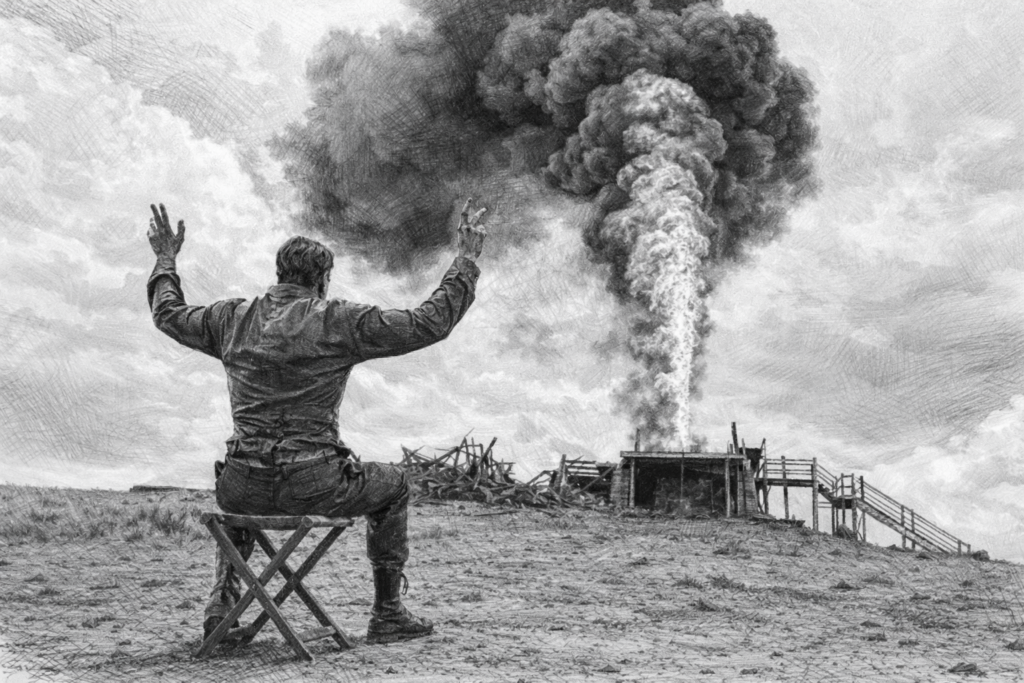
Oscar Wins: Best Actor, Best Cinematography
There Will Be Blood is one of the clearest cinematic representations of land as a wealth-building tool. Daniel Plainview’s relentless pursuit of property is rooted in his understanding that land is valuable not only for what it is—but for what it contains. By acquiring land rich in oil, he effectively controls an entire revenue stream beneath the surface. This reflects a fundamental real estate principle: the highest value of a property is often unseen, whether it’s mineral rights, development potential, or future rezoning opportunities. Plainview’s strategy mirrors modern investors who recognize that true wealth lies in long-term control of underlying assets.
Daniel Plainview isn’t just drilling for oil—he’s executing one of the most aggressive land acquisition strategies ever depicted on film.
He understands a key principle:
Owning land means owning what’s beneath it.
Real estate takeaway: The real value of property is often invisible.
🏢 The Apartment (1960) – Monetizing Space
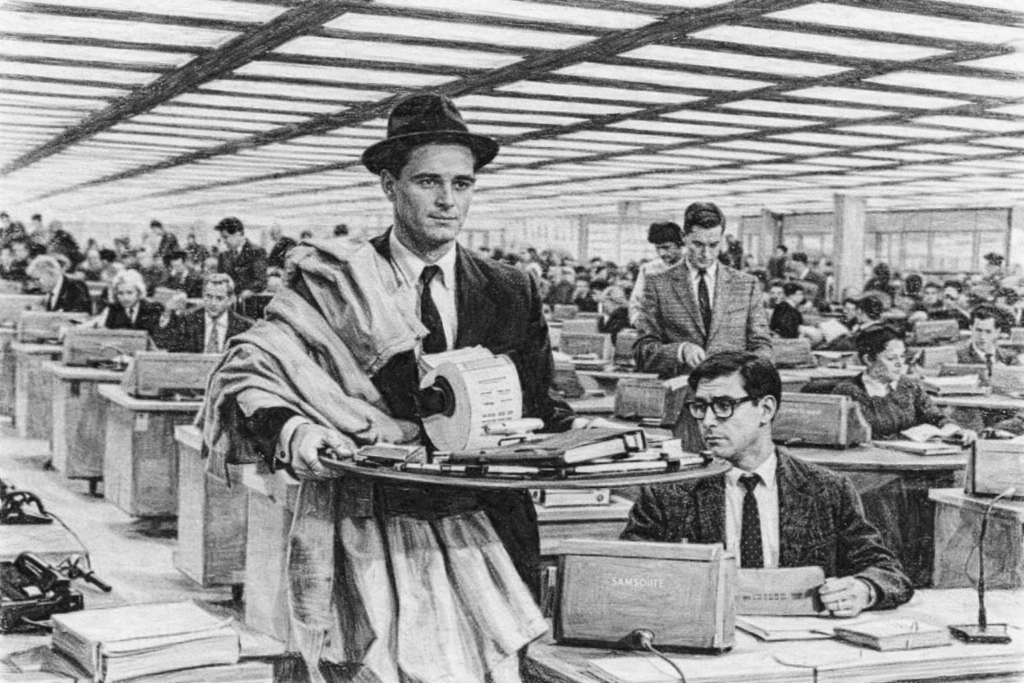
Oscar Wins: Best Picture, Best Director, Best Screenplay
The Apartment presents a uniquely urban perspective on real estate, where space itself becomes a form of social and economic currency. In a dense city environment, a single apartment transforms into a tradable asset leveraged for career mobility and personal gain. This dynamic is especially relevant in New York, where limited square footage drives both value and opportunity. The film illustrates how access to space—no matter how small—can influence power structures, relationships, and professional advancement. It’s a reminder that in competitive markets, ownership or control of space is often as valuable as capital itself.
A single apartment becomes a tradable asset—used for professional advancement.
In a city like New York, this concept is instantly recognizable: square footage equals opportunity.
Real estate takeaway: Space is currency.
🏚️ Parasite (2019) – Real Estate Defines Class
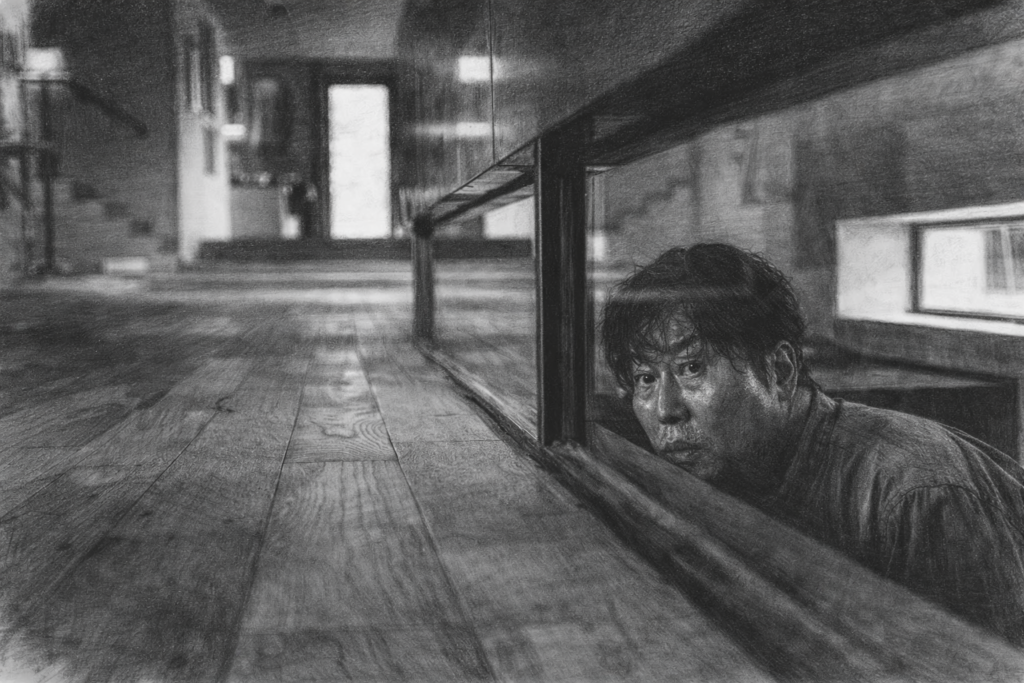
Oscar Wins: Best Picture, Best Director, Best Original Screenplay
Parasite is perhaps the most direct exploration of real estate as a determinant of social hierarchy. The stark contrast between the sleek, elevated modern home and the cramped semi-basement apartment visually and symbolically defines class divisions. The architecture itself tells the story: elevation equates to privilege, while subterranean living reflects economic struggle. This vertical separation mirrors real-world urban environments, including New York, where floor height, light exposure, and neighborhood positioning significantly impact value. The film underscores a powerful reality—real estate is not just about where you live, but about where you stand in society.
Few films make the connection between real estate and class as explicit as Parasite.
- Hilltop modern home → wealth and control
- Semi-basement apartment → survival
The vertical structure of the home mirrors economic hierarchy.
Real estate takeaway: Where you live determines how you live.
🏛️ Gone with the Wind (1939) – Land as Legacy
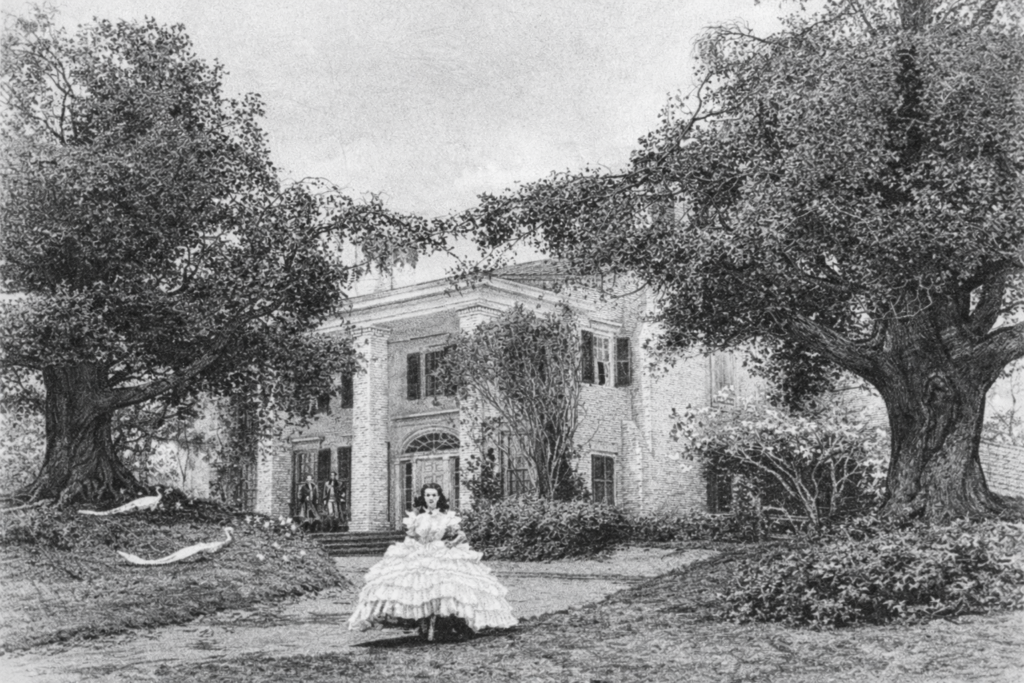
Oscar Wins: Best Picture and multiple awards
In Gone with the Wind, Tara is more than a plantation—it is identity, stability, and generational continuity. Scarlett O’Hara’s unwavering attachment to the land reflects a timeless principle in real estate: ownership provides security in times of uncertainty. Through war, economic collapse, and personal hardship, the land remains the one constant. This narrative reinforces the idea that real estate is not merely a financial asset, but a foundational pillar of legacy. Across generations, land ownership has consistently served as a means of preserving wealth, heritage, and a sense of place.
Tara represents more than property—it represents identity, resilience, and generational wealth.
Real estate takeaway: Land is the ultimate long-term investment.
🏙️ Final Thoughts: Real Estate Is the Hidden Plot
Across decades and genres, these films reveal a consistent truth:
Real estate isn’t just a backdrop—it’s the engine of the story.
Whether it’s a Manhattan apartment, a suburban home, or a hidden basement, property shapes:
- Power dynamics
- Economic mobility
- Personal identity
- Generational wealth
For real estate professionals—especially in New York—these films aren’t just entertainment. They’re reminders of what’s really at stake in every deal.